







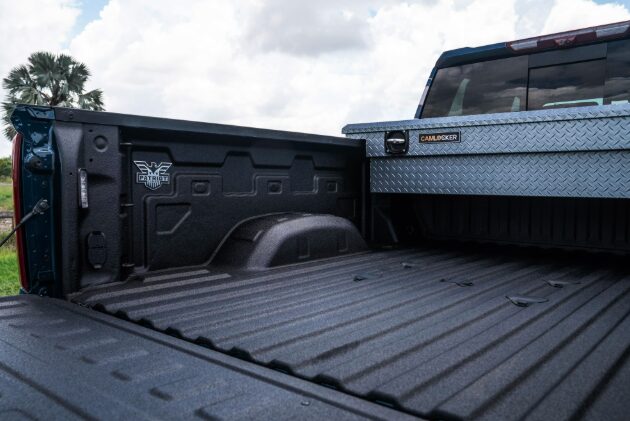
A bed liner spray kit is a coating system used to apply a protective layer to a truck bed. These kits prevent scratches, dents, and rust by sealing the metal against moisture, chemicals, and UV rays. Many spray-on coatings require abrasion and a primer, as well as proper surface preparation, before application to metallic surfaces. Here are the steps to prepare your truck bed for a bed liner spray kit:
Clear Out Debris
A bed liner spray kit applies a urethane coating that forms a bonded layer to protect truck surfaces from dings and wear. Loose accessories block access to the surface, so the truck bed should remain empty before preparation begins. Remove bed mats, storage boxes, mounting hardware, and any other items.
Sweep the bed corners and wheel wells because dirt often collects around seams and edges. Wash the surface thoroughly to remove mud, grease, and road residue. Even though larger debris is easy to see and remove, fine sand and dust can build up in the small gaps around the tailgate and need more careful cleaning to fully remove.
Warm water or cleaning agents remove loose buildup, and automotive soap helps clear dust and grime from exposed sections. Moisture should not remain on the bed surfaces. After rinsing the truck bed, dry the corners and rails completely, as moisture affects the coating and primer bonding.
Repair Any Damage
Surface damage affects liner consistency, so inspect the bed before sanding. Rusted areas need direct treatment, and any loose paint must be removed rather than sealed under the coating. Tie-down points commonly show small dents and scratches.
When damage extends into seams or corners, preparation becomes more involved, often requiring extra abrasion to properly key those sections. Any flaking coating should be stripped away to avoid weakening adhesion.
Sand Down Surfaces
Sanding creates a uniform surface that supports coating adhesion. Roughened surfaces improve layer contact because spray-on liners bond more effectively to abraded material. Sand the entire bed to create a rough, scuffed surface so the liner can permanently bond.
Pay attention to corners and rails where the coat is still glossy. Scuffing dust settles quickly inside seams, corners, and recessed hardware areas. Use a clean cloth or an air compressor to remove fine particles and debris from hard-to-reach sections. Wiping the surface thoroughly helps remove sanding residue and verifies your bed is ready for primer application.

Apply the Primer
Priming with bed liner kits creates a bonding layer between the truck bed and the coating. Thin, even coats improve coverage and help maintain a consistent texture across the cargo area. Primer should cover exposed metal and any repaired sections where sanding has removed paint. Once applied, the protective layer needs adequate time to dry before the liner goes on.
Truck beds may be made of steel or aluminum, and some already have a coating, so preparation needs to match the surface condition. Drying time also shifts with temperature, which makes environmental conditions just as necessary as application timing.
Uneven buildup can occur when the application moves too quickly or concentrates too heavily in one area, resulting in inconsistent texture. Spray kits often come with clear, comprehensive instructions to make sure you apply the liner evenly and properly.
Choose a Bed Liner Spray Kit
Preparation supports consistent application when using spray kits. Some systems also support color tinting, allowing your liner to match your vehicle’s specific automotive design. Contact an automotive company to learn more about the application process.