








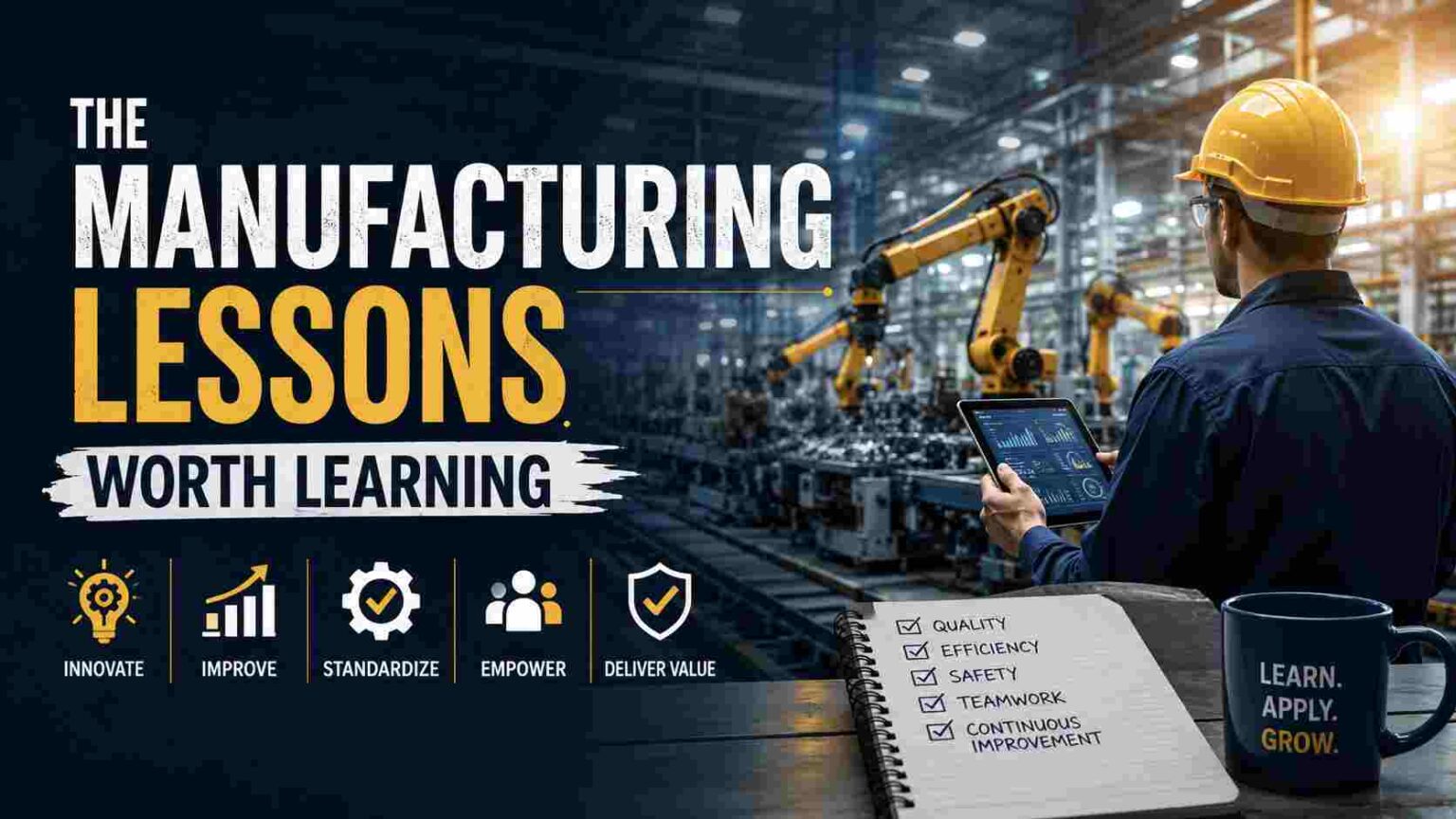
The modern manufacturing landscape is a masterclass in evolution. Over the past century, production floors have transformed from labor-intensive, chaotic environments into highly synchronized, automated ecosystems driven by data, precision engineering, and strict efficiency protocols. This shift did not happen overnight; it was forged through decades of trial, error, and costly operational failures.
For modern industrial leaders, the most valuable insights are not found in theoretical textbooks, but rather on the active production floor where machinery meets raw materials. Examining these historical and practical industrial realities reveals universal manufacturing lessons that any operation must internalize to remain competitive, resilient, and profitable in a volatile global market.
1. The Delusion of Localized Optimization
One of the earliest and most persistent traps in industrial operations is the pursuit of localized optimization at the expense of systemic health. It is incredibly tempting for a plant manager to focus heavily on maximizing the speed or output of a single, high-tech machine. However, if the downstream processes cannot handle that increased volume, the operation has not actually improved efficiency—it has merely created a costly bottleneck and bloated its work-in-progress inventory.
True efficiency requires systemic synchronization, a concept popularized by Lean manufacturing methodologies. Every step of a production line, from raw material intake to final packaging, must be carefully balanced to match the facility’s overall output cadence. True optimization is not about making individual machines run as fast as possible; it is about creating a continuous, predictable flow of material that eliminates waste, reduces physical handling, and minimizes stress on both the workforce and the equipment.
2. Advanced Material Preservation and Media Recovery
In heavy manufacturing and surface preparation industries, efficiency is deeply tied to how effectively a facility handles its consumables. For example, processes like abrasive blasting—used to clean, descale, or prepare industrial components for coating—rely on a continuous stream of specialized blasting media. Historically, older facilities treated this media as a single-use consumable, leading to exorbitant material costs and massive quantities of industrial waste.
A critical turning point in modern surface finishing was the realization that media preservation is an operational necessity. To achieve this, modern blast cabinets integrate an specialized abrasive separator reclaimer directly into the ventilation system. This specialized component acts as a pneumatic sorting system, drawing spent media, fine dust, and broken-down fragments away from the work chamber. By precisely balancing airflow and centrifugal force, the reclaimer separates reusable, structural abrasive grains from useless dust particles and heavy debris. This mechanical sorting loop yields a dual lesson for manufacturers: it drastically slashes recurring material expenses while simultaneously protecting operators from inhaling toxic particulate matter, demonstrating how environmental safety and cost control often stem from the exact same engineering solution.
3. Shifting from Reactive to Predictive Asset Management
For decades, the standard approach to factory maintenance was simple: if a machine broke down, you fixed it. While this reactive mindset feels intuitive, it is arguably the most expensive way to run a production facility. Unscheduled downtime does not just halt output; it cascades through supply chains, delays client shipments, forces emergency shipping fees for replacement parts, and subjects technicians to high-stress, hazardous repair environments.
The manufacturing sector has learned that asset longevity requires moving toward predictive maintenance models. By leveraging industrial IoT sensors, thermal imaging, and vibration analysis, facilities can monitor the real-time health of gearboxes, bearings, and electrical components. Understanding these subtle mechanical warning signs allows maintenance teams to schedule targeted repairs during planned weekend shutdowns rather than waiting for a catastrophic failure mid-shift. This proactive discipline extends equipment lifespans, stabilizes operational costs, and replaces chaotic emergencies with predictable, controlled maintenance routines.



4. Embracing the Power of Standard Operating Procedures
In an age of advanced robotics and artificial intelligence, it is easy to forget that human capital remains the backbone of manufacturing excellence. When production processes rely on the unwritten, specialized knowledge of a few veteran operators, an organization is structurally vulnerable. If those individuals retire or change careers, decades of critical operational nuance disappear with them.
Securing institutional knowledge requires a relentless commitment to creating and updating comprehensive Standard Operating Procedures (SOPs). An effective SOP is not a dry, multi-page text document buried in a corporate database; it is a highly visual, accessible, and practical guide stationed directly at the workstation. Standardizing tasks ensures consistency in product quality, accelerates the training process for new hires, and establishes a clear baseline for continuous improvement. After all, a process cannot be meaningfully optimized until it is first stabilized and standardized.
Conclusion
The enduring lessons of the manufacturing world remind us that industrial success is never an accident of luck or raw capital investment. It is the direct result of operational discipline, systemic thinking, and a respect for the fine details of material handling and machine maintenance. By looking past localized performance metrics, optimizing consumable lifecycles, anticipating mechanical wear, and formalizing human processes, manufacturers build resilient operations capable of weathering economic shifts. In the end, the ultimate lesson of modern industry is that sustainable profitability is built on a foundation of reliability, safety, and continuous, incremental improvement.